
Tamattu
You perform Umrah during the Hajj months, complete it and leave Ihram. You later enter Ihram again for Hajj in the same year. The Umrah and Hajj are distinct parts of the journey, with a break between their states of Ihram.

Learn the forms of Hajj, the journey through the sacred sites and the questions to settle before you travel.
Reviewed 12 November 2026 · Drawn from official Nusuk and Haramain resources.
Hajj takes place in Dhul-Hijjah and brings together rites in Makkah, Mina, Arafat and Muzdalifah. Learning the sequence helps you understand each day, while your authorised programme manages the practical movement between sites.
Begin by confirming the form of Hajj you will perform and the religious guidance you follow. Arrival rites, the timing of Sa‘i, the sacrificial offering and the release from Ihram are not identical for every pilgrim. The timeline below explains a common Tamattu journey, with important differences identified alongside it.
Individual circumstances and recognised differences of Islamic law need a qualified religious guide. Official eligibility, permits, health requirements and movement schedules must also be checked for the actual season.
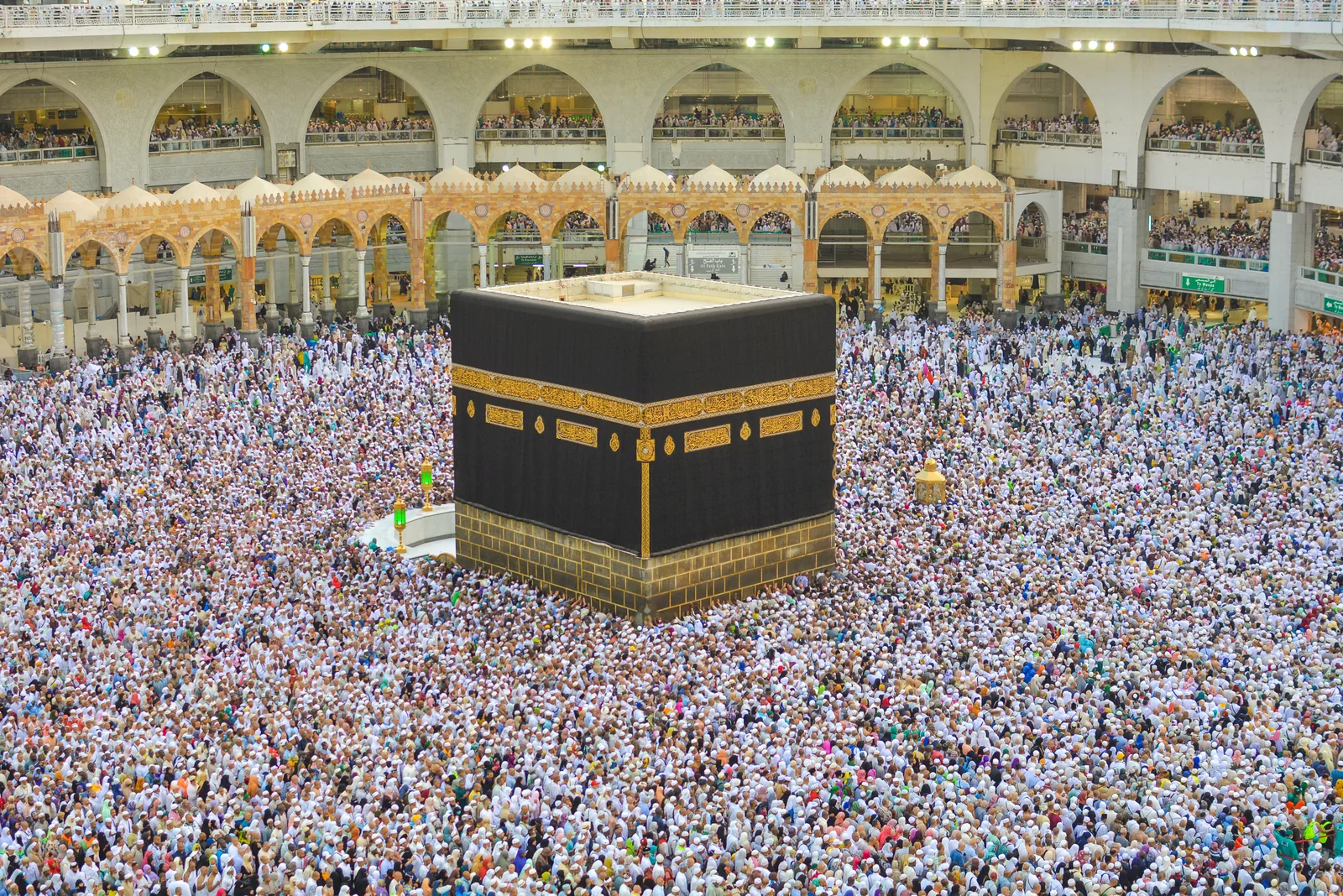
You perform Umrah during the Hajj months, complete it and leave Ihram. You later enter Ihram again for Hajj in the same year. The Umrah and Hajj are distinct parts of the journey, with a break between their states of Ihram.
You combine Hajj and Umrah in one continuous state of Ihram. You do not follow the Tamattu pattern of completing an arrival Umrah, cutting the hair and leaving Ihram before Hajj. Confirm the required Tawaf and Sa‘i sequence with your guide.
You enter Ihram for Hajj alone and remain in that state until the appropriate release. Tamattu and Qiran normally involve a required Hady offering under their applicable conditions; an offering is not required simply because a pilgrim chooses Ifrad.
Forms and differences: Haramain religious guidance and Egypt’s Dar Al-Ifta overview. Your guide should confirm how the rules apply to your circumstances.
A common Tamattu outline. Hijri dates describe the rites; confirm the corresponding travel dates and programme timetable for your season.
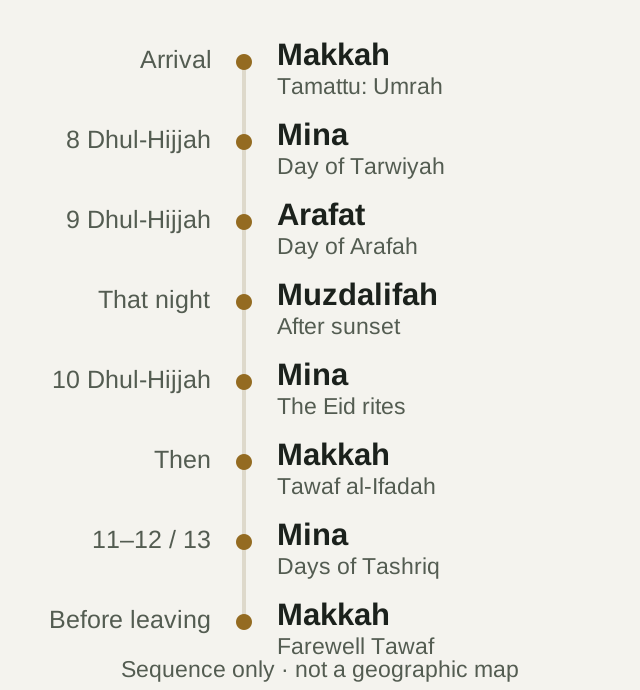
For Tamattu, enter Ihram for Umrah at the relevant Miqat, complete Tawaf and Sa‘i, then shave or shorten the hair as appropriate and leave Ihram. Review our Umrah steps before departure.
Qiran and Ifrad pilgrims have a different arrival sequence and normally remain in Ihram. Do not copy the Tamattu hair-cutting and release at this stage. Settle your intention and the correct sequence with your guide beforehand.
Tamattu pilgrims enter Ihram again, this time for Hajj, from where they are staying in Makkah. Pilgrims proceed to Mina for the Day of Tarwiyah, spending the day and night in prayer and preparation before travelling to Arafat.
Know your camp, group identification, meeting points and transport instructions. Keep essential belongings manageable, and follow the approved movement schedule rather than travelling independently because another group has already moved.
Travel to Arafat and devote the day to prayer, remembrance and supplication. Being present within Arafat during its prescribed time is central to Hajj. For the usual daytime itinerary, remain until sunset before departing with the programme.
Wuquf does not mean that you must climb Jabal al-Rahmah or remain physically standing all day. Stay within the recognised boundaries and follow your guide. Your exact prayer and movement arrangements should be explained before arrival.
After sunset, travel from Arafat to Muzdalifah. The usual itinerary includes the Maghrib and Isha prayers there and an overnight stay before continuing towards Mina. Prepare for an outdoor setting and keep your group’s contact and meeting plan clear.
Permitted concessions can affect departure timing for people with particular needs. Follow qualified guidance and your authorised programme; a general timeline should not be used to override an agreed concession or transport instruction.
In Mina, stone Jamrat al-Aqabah with seven pebbles, thrown individually. Learn the approach, counting and safe exit before entering the Jamarat route. Confirm the Hady arrangement that applies to your form of Hajj, then complete the appropriate shaving or shortening of the hair. These rites lead to the first release from Ihram under its applicable conditions.
The precise conditions, permitted changes in order and remaining restrictions need to be clear with your guide; changing clothes does not by itself mean every restriction has ended.
Return to Makkah for Tawaf al-Ifadah: seven circuits around the Kaaba. This is distinct from the farewell Tawaf. In the Tamattu outline, complete the Hajj Sa‘i as well; the earlier Sa‘i belonged to Umrah.
For Qiran and Ifrad, whether Sa‘i is still due depends on the arrival rites already performed and the legal guidance followed. Complete the remaining requirements before assuming full release from Ihram.
During the days of Tashriq, remain in Mina according to your programme and perform the prescribed stoning. On each relevant day, the usual sequence is the small Jamrah, the middle Jamrah, then Jamrat al-Aqabah, with seven pebbles at each.
Learn the applicable timing and follow the authorised crowd-management route. Some pilgrims leave on the 12th under the relevant conditions; others remain for the 13th. Confirm your departure plan in advance, including the rule concerning sunset on the 12th.
Arrange Tawaf al-Wada, the farewell Tawaf, in connection with your final departure from Makkah. Do not confuse it with Tawaf al-Ifadah or assume a final hotel check-out automatically completes the religious requirements.
Recognised exemptions apply, including for menstruating women. Those exemptions do not automatically remove other rites still due. Your guide should confirm your own position and how the final transport schedule fits around it.
Day order: Nusuk Hajj Journey. Detailed Tamattu outline and concessions: Haramain’s How to Perform Hajj (PDF). Arafat context: official Haramain sacred-sites guidance.
Not without checking your own form of Hajj and arrangements. Tamattu, Qiran and Ifrad differ, and programmes may use permitted variations in scheduling. Agree the plan with your religious guide and authorised operator before the main days begin.
Raise it early with your religious guide and, where needed, a clinician. Individual concessions, assistance or timing changes may apply. Do not simply skip a rite, appoint someone else or assume an exemption without advice specific to your situation.
Check the route applicable to your country of residence and the current season. Nusuk Hajj identifies its serviced countries and authorised providers. Registration alone is not acceptance for Hajj. Review current health requirements through the Saudi Ministry of Health.
The offers currently published on this website are Umrah programmes. You can discuss Hajj plans with Mabrook, but any programme, eligibility, provider authorisations and official booking route must be established for that enquiry.
Share your country of residence, intended season, travelling companions and the questions you would like to discuss.
Talk to Mabrook