Reviewed 12 November 2026 · Based on official Nusuk and Haramain guidance.
Know the four stages.
Umrah follows a clear sequence: enter Ihram with the intention for
Umrah, perform Tawaf around the Kaaba, complete Sa‘i between Safa and
Marwah, then shave or shorten the hair to leave Ihram. The two units of
prayer after Tawaf sit within this journey.
Learn the order and the meaning of these words before departure. Agree
where your group will meet, how to reach your guide and what assistance
anyone needs. Prepare your clothing before reaching the relevant Miqat,
the boundary for entering Ihram on your route.
This is a practical introduction to the usual rites. Questions involving
illness, menstruation, disability, a missed Miqat or a particular school
of Islamic law deserve individual guidance from a qualified religious
guide.
Follow the sequence at a considerate pace. Worship should never become a
reason to push or harm another person.
Prepare and enter Ihram
Prepare your clothing before the Miqat, the boundary on your route.
Make the intention to begin Umrah at or before crossing it, and
recite the Talbiyah. Ihram is entered through this intention, rather
than by putting on the clothing alone.
Clothing and Miqat preparation
Men wear the two Ihram cloths; women wear suitable modest
clothing, without a prescribed Ihram colour. Learn the applicable
clothing and covering rules with your guide. If flying to perform
Umrah, establish in advance when your flight approaches the Miqat.
Keep the restrictions of Ihram in mind, including fragrance, hair
or nail removal and marital intimacy.
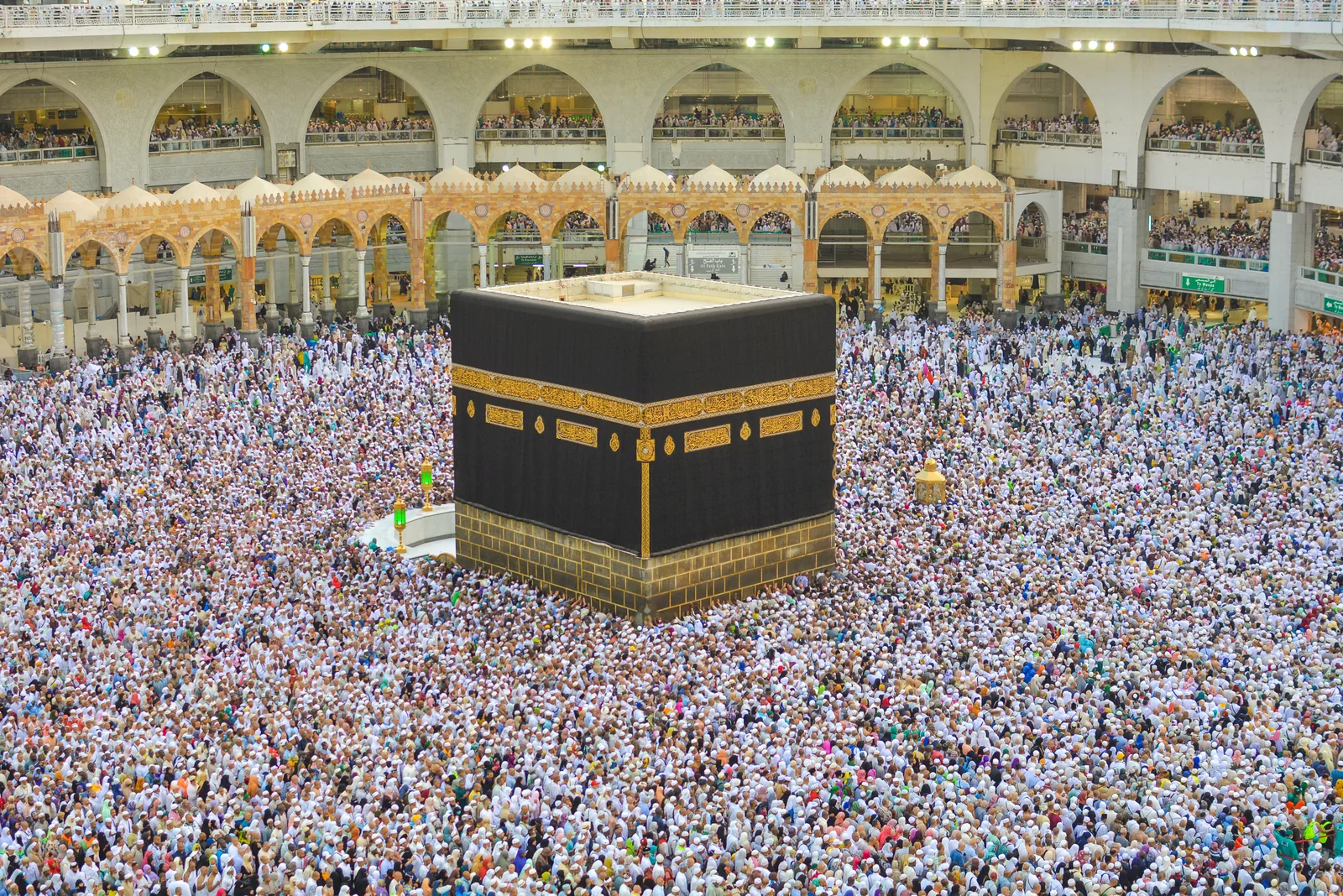
Begin Tawaf at the Black Stone
Arrive at Al-Masjid al-Haram prepared for Tawaf, including Wudu.
Identify the alignment of the Black Stone with your guide or the
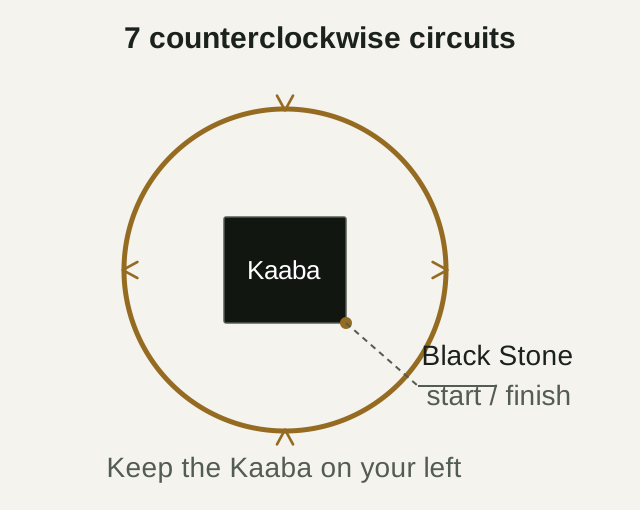
official signs. Begin from that alignment, keeping the Kaaba on your
left, and move counterclockwise with the flow of pilgrims. Keep each
circuit outside the semicircular Hijr area beside the Kaaba.
Repeat the same full circuit seven times. The dashed line marks
the Black Stone alignment; there is no need to approach the wall.
The diagram is schematic, with no geographic orientation or scale.
The Black Stone and Hijr
You do not need to reach or kiss the Black Stone to perform Tawaf.
When it is crowded, acknowledge its alignment as taught by your
guide and continue without forcing your way through.
Complete seven circuits
One complete return to the Black Stone alignment counts as one
circuit. Complete seven, keeping a reliable count. Use the time for
remembrance of Allah and personal supplication; the rites do not
require an invented script for every lap.
Recommended Tawaf practices
For men, the recommended brisk steps in the first three circuits
and uncovering of the right shoulder belong to the appropriate
arrival/Umrah Tawaf, where practicable. They are not instructions
for women or a reason to rush into others. Ask your guide to
demonstrate these details before starting.
Pray after Tawaf
After seven circuits, men cover the right shoulder again. Pray two
units of prayer, preferably behind Maqam Ibrahim when this can be
done safely. If that area is busy, use another suitable place in the
mosque rather than blocking the moving Tawaf crowd.
Moving on to Sa‘i
Take a moment to orient yourself, then follow the official signs
towards Safa and the Sa‘i area. Keep moving with the designated
pedestrian flow, particularly when leaving the Tawaf area with a
group.
Perform Sa‘i from Safa
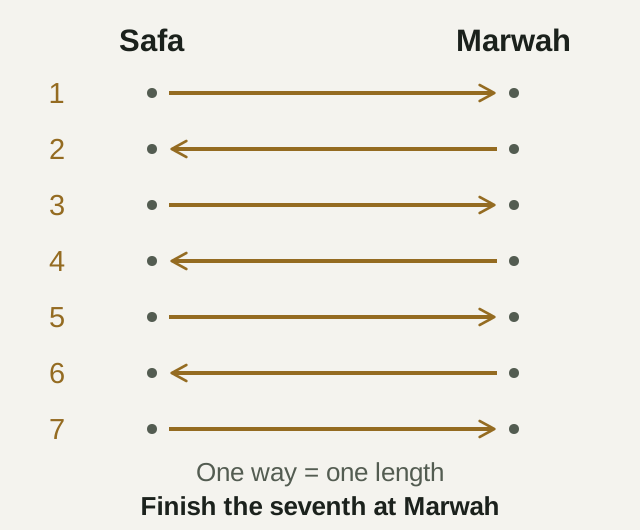
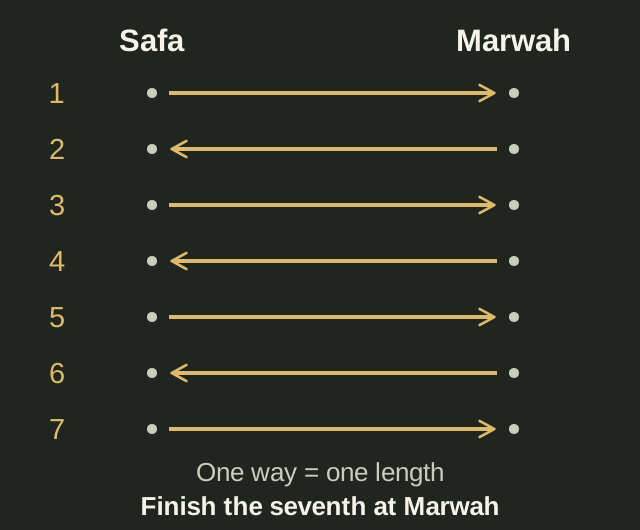
Start at Safa and walk to Marwah: that is the first length. Return
from Marwah to Safa for the second. Continue for seven lengths in
total, finishing at Marwah. A return journey is two lengths, not
one; keeping this distinction clear avoids accidentally doubling the
rite.
Safa to Marwah counts as one. The return counts as two. The
seventh length ends at Marwah.
Pace and assistance
Make remembrance and supplication along the way. Men who are able
move briskly between the designated green markers; women walk
normally. Respect the movement of other pilgrims and use the
access or assistance arrangements agreed with your guide.
Shorten the hair and leave Ihram
After Sa‘i, men shave the head or shorten its hair; women shorten
the ends of their hair. Learn the appropriate way to do this before
the final stage, and use a suitable private setting for women and an
appropriate barber or arrangement for men.
Completing the final rite
With the required hair-cutting completed, the Umrah is completed
and you leave Ihram. Changing clothes alone does not complete this
final rite. If you have a personal circumstance affecting it, ask
for guidance before assuming that the restrictions have ended.
Agree a meeting place outside the moving crowd, save the group contact
details and let companions know before separating. If you lose your
group, use the agreed contact plan and official staff assistance rather
than moving against the flow.
Plan for your own pace
Discuss general mobility, rest and assistance needs before departure.
Confirm current accessible routes and services through the official
arrangements for your visit. A realistic plan is more useful than
assuming everyone in a family or group can move at the same speed.
Separate rites from travel
Flight times, entry permissions, hotel stays and visits to Madinah are
travel arrangements to plan alongside the rites. Check their current
requirements separately. Mabrook’s published programme pages explain the
advertised services for each departure.
Time in Madinah can be planned alongside your journey
Questions before you go.
Do I need to touch the Kaaba or Black Stone?
No. Reaching them is not a condition for completing your seven Tawaf
circuits. Do not push, stop the flow or put yourself or another
pilgrim at risk. Learn the appropriate acknowledgement of the Black
Stone with your guide.
Must I recite a different prayer for each circuit?
There is no compulsory seven-circuit script. You may make
remembrance and supplication with understanding. A qualified guide
can teach the established supplications and their places without
turning a printed checklist into an additional ritual requirement.
What if I am unsure about a count or an interruption?
Ask your religious guide promptly. The answer depends on what
happened and the guidance you follow; do not add or omit a rite
merely to keep up with the group. Agree how to reach the guide
before beginning.
What if menstruation or illness affects my plans?
Seek individual religious guidance early, alongside medical advice
where relevant. These circumstances can affect the timing of Tawaf
and other arrangements. Avoid relying on a general travel page to
decide a personal ruling or using medication without clinical
advice.
Are visa and permit rules the same as these ritual steps?
No. Entry permissions, booking requirements and health regulations
can change. Check the official
Nusuk Umrah platform, relevant authorities and your travel arrangements for the actual
dates of your visit.
Prepare with Mabrook.
Explore the published Umrah programmes, then talk to us about your dates,
companions and the guidance arrangements for your departure.